Are Wasps Pollinators? The Overlooked Insects Keeping a Warming World in Bloom
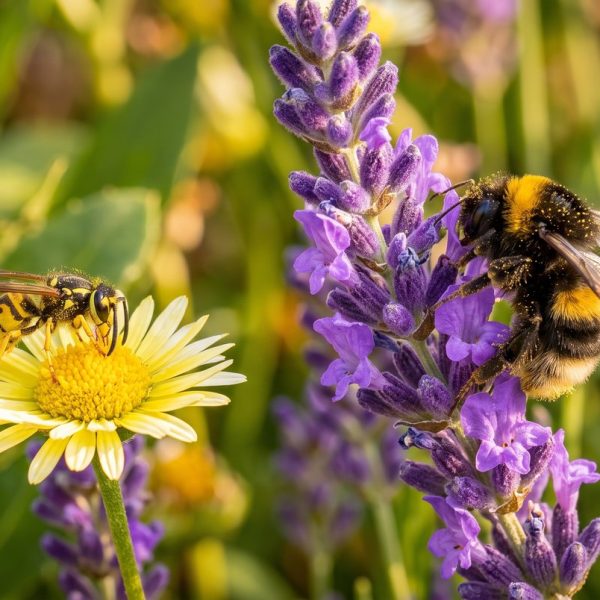
Ask most people to name a pollinator and they will say bees, maybe butterflies, and stop there. Yet the work of moving pollen from flower to flower is shared by a far stranger cast of characters. Are wasps pollinators? Yes, and so are moths, beetles, flies, and even a few birds and bats. As the climate warms and habitats shift, understanding who actually keeps our plants reproducing has stopped being trivia and started to matter.
Are wasps pollinators, really?
They are, and more than you would guess. When a wasp visits a flower for nectar, pollen sticks to its body and travels to the next bloom, exactly as it does with a bee. Some plants depend on wasps almost entirely. Figs are the classic case, pollinated by tiny fig wasps in a relationship so tight that neither survives without the other. Wasps are less efficient than bees because their bodies are smoother and carry less pollen, but across a whole meadow their contribution adds up. So the next time one hovers near your picnic, remember it is also quietly doing a job the ecosystem needs.
The pollinators hiding in plain sight
Bees get the headlines, but the supporting cast is huge, and the full range of pollinators is far wider than most people expect. Are butterflies pollinators? Clearly yes, drifting between flowers in daylight and favoring bright, flat blooms they can land on. Are moths pollinators? Just as much, working the night shift and servicing pale, heavily scented flowers that open after dark. Flies, including hoverflies that mimic bees, handle a surprising share of the load, and beetles were among the very first pollinators, older than the bees themselves. Hummingbirds, and in warmer regions bats, round out a network far more diverse and more fragile than the save the bees slogan suggests.
Why a warming world is scrambling the timing
Pollination runs on timing. For millions of years, flowers have opened just as their pollinators emerge. Climate change is pulling those two events apart. Warmer springs can coax plants to bloom before the insects that feed on them wake up, a mismatch scientists call phenological decoupling. Ranges are shifting too, with some species moving uphill or toward the poles in search of familiar temperatures, sometimes leaving their partner plants behind. Add habitat loss and pesticides, and you have a slow squeeze on the creatures our food supply leans on. This is one of the clearest threads running through modern biodiversity loss, and pollinators sit right at the center of it.
What you can actually do in your own garden
The good news is that pollinators respond quickly to help. A patch of flowers that attract pollinators, planted in a sunny spot and left unsprayed, can draw bees, hoverflies and butterflies within a single season. Choose a mix that blooms across spring, summer and autumn so there is always something on offer, and lean toward native species, which local insects recognize and prefer. Leaving a corner of the garden a little wild, with bare soil, leaf litter and a few hollow stems, gives ground nesting bees and overwintering insects a home. Gardening communities such as the r/NativePlantGardening community are full of regional advice on what to plant and what to skip.
Which flowers pull their weight
Not every pretty bloom is useful to insects. Many showy garden hybrids have been bred for size and color at the expense of the nectar and pollen that pollinators actually need, and some double flowered varieties hide their centers so completely that a bee cannot reach in. Single, open flowers are the safer bet. Lavender, borage, oregano left to flower, sunflowers, and simple daisies all earn their place. Herbs are especially generous once they bolt, and a window box of them will feed passing insects even without a garden. The aim is a long, overlapping season of easy meals rather than one dramatic burst.
Wasps do a substantial amount of pollination and receive almost no credit for it, because the story about bees was told first and told well. Reputation rarely tracks contribution, in ecosystems or in markets. The conversation about the latest phones shows the same distortion, with incremental upgrades presented as breakthroughs while genuinely useful changes go unremarked.
Wasps illustrate how easily an unglamorous contributor gets overlooked in favour of a more appealing one. The attention goes to bees while the wider work goes unrecorded. Development economics has a similar blind spot, which is why understanding what are remittances worth changes how people see the whole picture.
A global problem that crosses languages
Pollinator decline does not respect borders, and neither does the response. Researchers compare notes across continents, and the treaties meant to protect biodiversity are negotiated in many tongues, often through French, long regarded as the language of international diplomacy. Citizen scientists photographing bees in a back garden in one country feed data that helps researchers in another, but only when the findings are shared clearly and accurately. The health of pollinators is a shared account, and everyone who plants a flower or reports a sighting is paying into it.
Small creatures, outsized stakes
Roughly three quarters of the crops that feed us depend, at least in part, on animal pollination. That makes the question of who pollinates far more than idle curiosity. Are wasps pollinators, are moths, are the flies you usually swat away? Yes, all of them, each holding up a corner of a system we rarely notice until it wobbles. Protecting them does not require grand gestures. It asks for a little tolerance, a few of the right plants, and the willingness to see the overlooked insects around us as the workers they are.