How Wild Weather Is Redrawing Animal Migration Maps
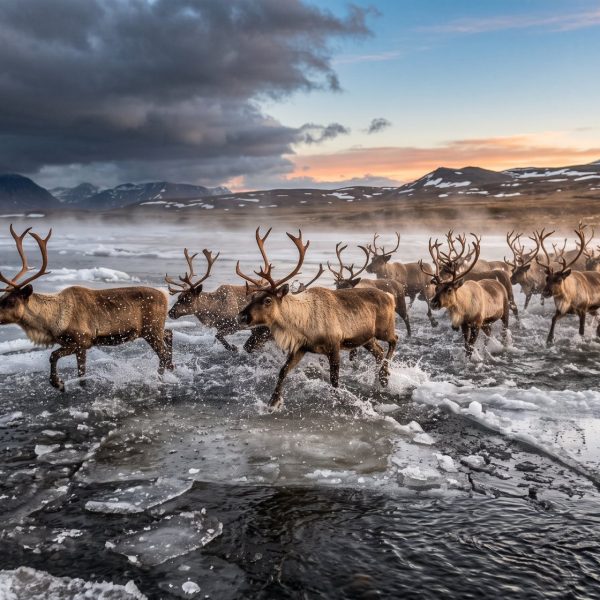
For centuries, animals moved on a schedule you could almost set a clock to. Birds left when the daylight changed, whales followed cold currents, and herds tracked the same grass their ancestors did.
That reliability is breaking down. Warmer springs, longer droughts, and heavier storms now arrive at the wrong times, and animals are adjusting faster than most field guides can keep up with.
The core problem: the natural cues animals depend on (temperature, rainfall, daylight) no longer line up the way they used to.
What The Data Actually Shows
Researchers tracking tagged animals across continents keep logging the same shifts. The pattern is consistent enough that it shows up in birds, mammals, fish, and insects alike.
- Earlier departures. Many migratory birds now leave and arrive days or even weeks ahead of their historical averages.
- New routes. Some species detour around regions that have turned too hot, too dry, or too built-up to cross safely.
- Shorter trips. A handful of populations have stopped migrating at all, staying put where winters no longer push them to move.
- Higher ground. Mountain species keep climbing to cooler elevations, until there is no higher ground left.
For the broader science behind these movements, the overview on animal migration is a solid place to start before the field studies.
Why A Few Days Matters So Much
Timing is everything in the wild. A bird that arrives early may find the insects it feeds its chicks have not hatched yet. A calf born before the grass greens up starts life already behind.
Ecologists have a term for this, and it explains why small changes ripple outward. When one link in the food chain shifts and the next one does not, the mismatch does its damage quietly, one missed meal at a time.
The takeaway: it is rarely the heat itself that kills, it is the bad timing the heat creates.
The Species Winning And Losing
Not every animal loses in this shuffle. Generalists that eat almost anything and breed in many places often adapt quickly, and some even expand their range.
Specialists have the hardest time. A creature built for one narrow band of temperature, one food source, or one nesting season has little room to improvise when that band moves.
- Adapting well: crows, raccoons, white-tailed deer, and other flexible generalists.
- Struggling: polar species, alpine specialists, and animals tied to a single prey.
The People Watching It Happen
Some of the sharpest observations come from people outside formal science. Hunters, farmers, and hikers notice when a species turns up in the wrong month, and forums like the r/wildlife community collect thousands of these firsthand reports each season.
That ground-level record matters because it fills the gaps between funded studies. A satellite tag follows one animal for a season, but a farmer has watched the same valley for forty years.
How The Science Travels
Wildlife does not respect borders, and neither does the research that tracks it. A migration study might start with data gathered in Norway, get analyzed in Canada, and inform policy in Kenya.
Migration research is collaborative by necessity, since the animals being tracked cross borders that the researchers must then coordinate across. Shared datasets are only as useful as the shared understanding of how they were gathered. These scientific translation services exist for precisely that problem, where automated translation still falls short.
That only works if the findings can actually be read across languages. Research teams and conservation groups often rely on professional technical translation to move detailed scientific reports between countries without losing accuracy along the way.
When a study is translated poorly, the data is still right, but the meaning gets lost, and decisions get made on a blurry copy.
Why This Is Hard To Reverse
The tricky part is that these shifts feed on themselves. A forest that dries out attracts different insects, which draw different birds, which change what the local predators eat, and each link nudges the next one further from where it started.
Once a species abandons an old route, the knowledge of that route can vanish with it. Migration paths are often learned and passed down, so a single broken generation can erase a pattern that took thousands of years to form.
That is why researchers treat early monitoring as the real work: catching the drift while there is still a baseline left to compare against.
What You Can Watch For
You do not need a research grant to notice the change. Keep an eye on a few simple markers near where you live:
- The first day you hear returning birds each spring
- When local trees flower compared to past years
- Whether familiar animals show up earlier, later, or not at all
- New species you have never seen in your area before
Write the dates down. Over a few years your own notes become a small dataset, and they will likely tell the same story the large studies do.
The animals are not confused. They are responding to a world that keeps moving the goalposts, and their new routes are a warning worth reading closely.