How Global Teamwork Is Racing to Save Wildlife From a Warming Climate
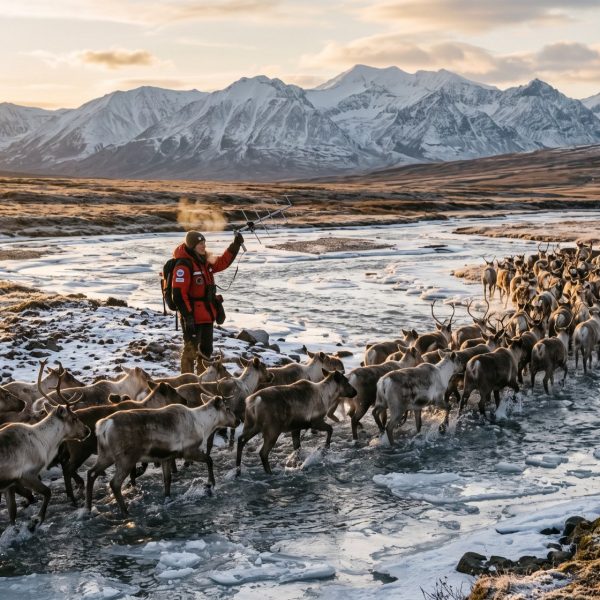
Across the Arctic, radio-collared caribou are shifting their ancient migration routes by weeks. In the Alps, marmots emerge from hibernation earlier each spring. These small shifts, logged by field biologists in a dozen countries, add up to one of the clearest fingerprints of a warming planet.
The animals do not respect borders, and neither does the science that tracks them. A single study on shifting bird ranges might pull temperature records from Norway, nesting data from Poland, and satellite imagery processed in the United States. Wildlife research has quietly become one of the most international jobs on Earth.
Is Climate Change Real for the Species We Watch?
Ask a zoologist counting puffins on a shrinking cliff colony and the question answers itself. The International Union for Conservation of Nature keeps a running ledger of species pushed toward the edge, and climate pressure appears again and again in the assessments. You can read the raw entries yourself on the IUCN Red List, which now flags thousands of species affected by habitat shifts.
The climate change definition scientists use is deliberately plain: long-term changes in temperature and weather patterns, driven largely by human activity since the industrial era. The background on climate change is well documented, but the wildlife angle is where the abstract becomes concrete. A two-degree shift is a statistic. A coral reef bleaching white is not.
Why Zoos Became Research Hubs
Wildlife world zoos have changed their role over the past two decades. Many now run breeding programs for species that can no longer survive in their original ranges, and they publish the results for peers abroad. A breeding protocol developed in a German zoo might save a frog species in Central America, but only if the paperwork travels cleanly across languages.
That last part matters more than most people expect. Conservation is built on shared protocols, and a mistranslated dosage or a garbled habitat note can undo months of fieldwork.
The Paperwork Problem Nobody Talks About
Climate change articles rarely mention the boring machinery behind the headlines: permits, grant applications, veterinary records, and peer-reviewed papers that all need to move between research teams who do not share a first language. A grant reviewer in Brussels may need a study originally written in Portuguese. A wildlife import permit may hinge on a certificate that must be legally exact in two languages.
When accuracy is not optional, research teams lean on professional scientific translation services to keep the meaning intact. A field note is one thing. A regulatory document that decides whether an endangered animal can cross a border is another, and getting a term wrong there carries real consequences for the animal.
The science of saving species runs on trust, and trust runs on precise language.
Climate pressure reaches the dinner table considerably faster than most people expect, changing what can be grown where and at what cost. Crops shift, fisheries move and staple ingredients quietly become seasonal luxuries. Watching global food trends is one way to see those ecological changes translated into everyday menus.
What Gets Lost Without It
Consider a few of the places where careful translation quietly holds conservation together:
- Cross-border tracking studies, where one team's raw data feeds another team's model
- International breeding agreements between zoos and reserves
- Veterinary and health records that follow an animal during a transfer
- Grant proposals submitted to funders in a different country
- Policy briefings that turn field findings into protection laws
None of these are glamorous. All of them fail badly when a key phrase is guessed rather than translated by someone who understands both the language and the science.
Weather, Wildlife, and the Long View
The phrase "wild weather" used to mean an unusual storm. Now it describes a pattern. Longer droughts, heavier rains, and heat waves that arrive out of season are reshaping the habitats animals depend on. Researchers are documenting range shifts in real time, and the pace has surprised even the people who predicted it.
What gives conservationists hope is not a single breakthrough but the sheer volume of coordinated work. A researcher in Kenya can compare notes with a colleague in Canada within hours. A dataset gathered in one hemisphere can strengthen a model built in another. The infrastructure of modern science, imperfect as it is, moves faster than it ever has.
That speed only helps if the information stays accurate as it crosses each border. A finding that loses its meaning in transit is a finding wasted, and in conservation there is rarely time to waste.
The Takeaway for Readers
Wildlife and climate change are usually told as a story of loss. There is plenty of that. But there is also a quieter story about how much cooperation it takes to fight back, and how much of that cooperation depends on getting the details right across languages and systems.
The next time you read about a species pulled back from the brink, look at how many countries are named in the credits. Behind almost every recovery is a network of people who agreed to share what they knew, and who made sure nothing important got lost on the way. The animals are moving fast. The science, and the words that carry it, have to move faster.